

You Can Count to 1,023 on Your Fingers
Ten fingers can represent rather more than ten. Treat each one as a switch, and you've got a small, slightly awkward binary computer.
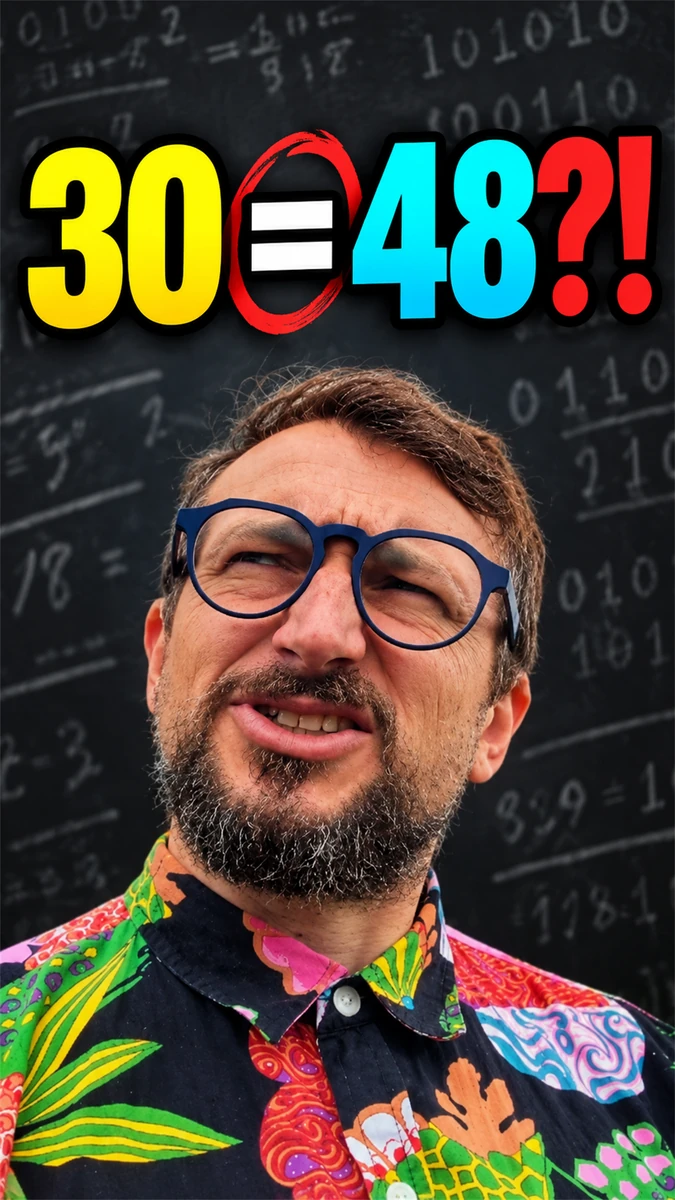
In my birthday video, I celebrated turning 30. In hexadecimal. That's 48 in the decimal system most of us use, which explains the wrinkles.
The birthday excuse let me indulge a better question: why stop at ten when we're counting on our fingers? Give each finger a different value, and ten fingers can represent every whole number from zero to 1,023.
Count the switches
Usually, a raised finger means one. Five raised fingers means five. We're counting marks, much as we might make tally marks on paper.
Instead, imagine that each finger is a switch. Down means off; up means on. Give the first finger a value of one, then double the value as you move along:
| Finger position | 1 | 2 | 3 | 4 | 5 |
|---|---|---|---|---|---|
| Value | 1 | 2 | 4 | 8 | 16 |
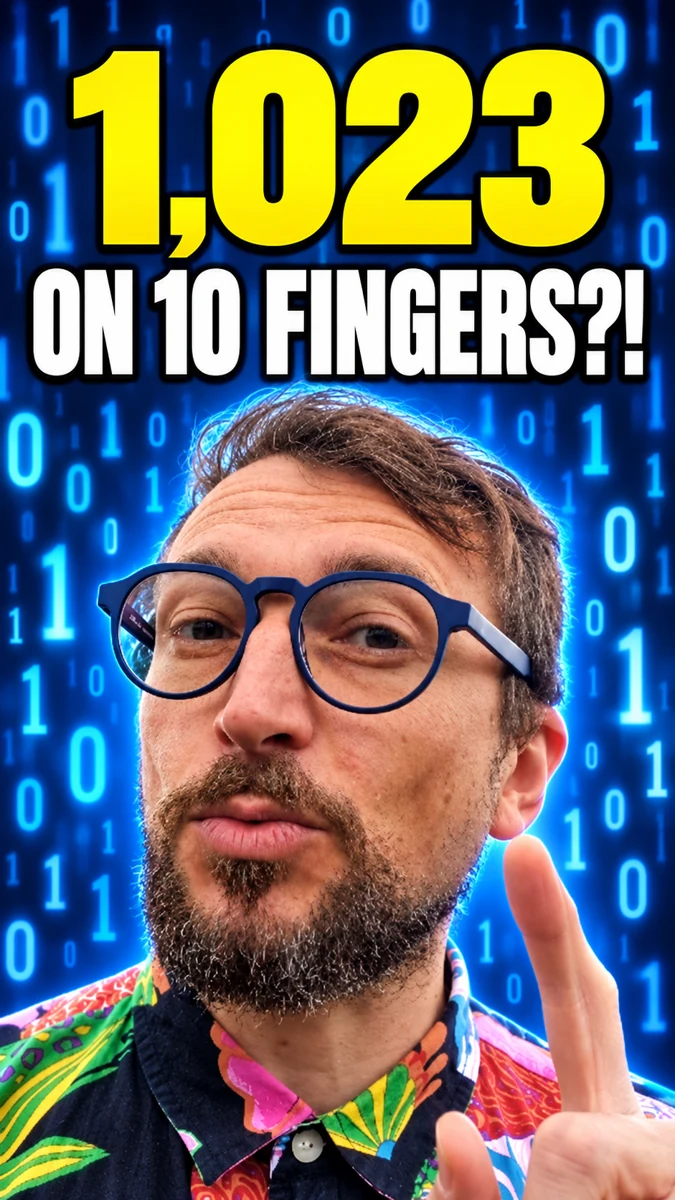
The second hand continues with 32, 64, 128, 256, and 512. Choose an order you can remember, and keep it consistent.
To show five, raise the fingers worth four and one. To show ten, raise eight and two. All ten fingers raised gives:
1 + 2 + 4 + 8 + 16 + 32 + 64 + 128 + 256 + 512 = 1,023.
There are 1,024 possible patterns, including all fingers down for zero. That's the extra value that's easy to miss: we're representing numbers from zero, rather than starting at one.
Some combinations are easier on the hands than others. I wouldn't choose this as the most comfortable way to keep score. It is a useful way to see what binary means.
A shorter way to write the same pattern
Binary uses two digits, zero and one. Hexadecimal uses sixteen: zero to nine, then A to F. One hexadecimal digit represents four binary digits, so a long row of switches becomes easier for a human to read.
For example, binary 1111 is fifteen in decimal and F in hexadecimal. Hexadecimal 30 means three sixteens and no ones: 48 in decimal. The number hasn't changed. We've changed how we write it.
That's why my birthday arithmetic works. It's also why these counting systems are more than a party trick. They provide a bridge between the patterns computers work with and something people can read.
For decades, people learnt specialised languages to talk to computers. Language models now give us another kind of bridge through everyday language. I rather like celebrating an older one, even if my youth football team might have preferred a different lesson that day.
Try five and ten on one hand first. Once the switch idea makes sense, the second hand is just more doubling.
Adapted from my Akermoor birthday video.
For another view of the human-computer relationship, AI Still Needs Craft considers where review and judgment belong in making things with AI.