

AI Still Needs Craft
Generative AI can help throughout a creative process, but the judgment that gives work its purpose, character, and quality still needs attention.
Generative AI can produce a finished-looking thing before we've worked out what deserves to be made.
That's the risk that interests me. The speed is useful. So is the ability to explore alternatives. But an impressive first result can tempt us to skip the thinking that would make the result worthwhile.
Craft means giving that thinking a place in the process: deciding what the work has to do, bringing a direction to it, finding its weaknesses, and choosing what to keep.
Check it against the purpose
In the video, I discuss an AI-generated mural of Bristol landmarks that included the wrong Cabot Tower: the one in Newfoundland, rather than the Bristol landmark.
There's an easy lesson there. Before accepting an image, check its details against the actual place, person, or purpose it is meant to represent.
I don't know how that mural was made or checked. A person painting by hand could also choose the wrong tower. The point isn't that one medium guarantees care and another prevents it. It's that the work still needs a direction and a check against reality.
The same applies to software, prose, or a presentation. Looking finished doesn't establish that it fits.
Mix your own colours
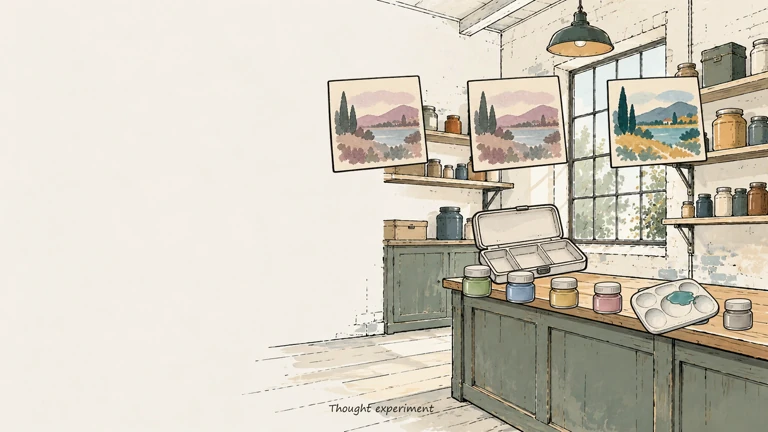
Imagine a new painter's palette arriving with seven colours ready to use. Over time, everyone's paintings begin to look similar. We could blame the palette, but we could also ask whether anyone tried mixing the paints.
That's how I think about default AI output. We can bring our own references, language, constraints, and taste to the work. We can then judge whether the combination produces anything worth keeping.
For this channel, I prefer artwork that looks a bit wonky and hand-drawn. Early experiments impressed me with their realism, but that hyperreal quality didn't feel right for what I wanted to make. The rougher visual character feels closer to my own.
That preference becomes something I can describe, try, criticise, and refine. It gives the tool a direction beyond making an impressive picture.
References help when we understand what we want from them. A clear presentation with bold colour and some pop-art oddness is a more useful direction than collecting famous names and hoping their combination will somehow become a style.
It might still turn out dreadful. That's where taste comes in.
Ask what needs work
One of the most useful creative habits I've developed is asking for criticism rather than praise.
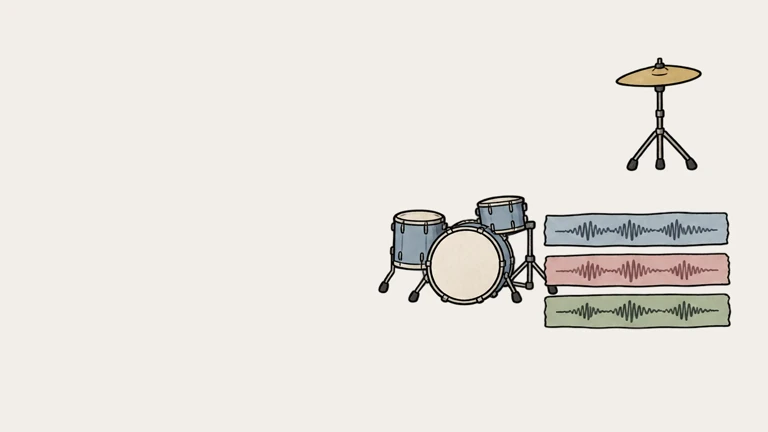
When I played Jess an early draft of my first Bearcraft album, she asked whether I was going to turn the cymbals down. I asked, “What cymbals?”
My hearing loss had created a blind spot I hadn't recognised. Another perspective made it visible.
That is the kind of help I want from a review: something specific I can inspect and act on. AI can help with criticism too, provided it can actually inspect the medium involved. A review of a script tells us something about the script; it doesn't tell us how the finished performance sounds.
Ask where the work fails its purpose, what seems unclear, or which choice weakens its character. Then judge the criticism. A confident objection can be wrong just as a confident first draft can be wrong.
When a criticism is useful, work on that part. You don't need to remake everything and lose the choices you liked.
Keep the rejected attempts useful
At an early job, we were given James Webb Young's A Technique for Producing Ideas. Its account of finding new relationships between existing elements influenced how I think about creative work.
Combining influences doesn't guarantee a good idea. It does give us something to explore, test, and improve.
The finished work can hide the sketches, abandoned directions, and awkward drafts that helped its maker decide what belonged. AI can participate in those stages too: exploring an angle, finding a weakness, or helping us compare alternatives.
We don't need to manufacture effort to prove that we've been creative. Spending longer doesn't make something better by itself. A default can be exactly the right choice when it serves the work.
The responsibility is to notice the choice and decide whether it fits.
For the next thing you're making, write down its purpose before asking for a finished version. Describe a few qualities that would make it yours. Try an alternative. Ask for a specific criticism, and check whether the criticism is useful.
Keep what works. Change what doesn't. Leave room for an unexpected direction worth following.
That's where I think the craft is: in the process, the judgment, and the taste we bring to it.
Adapted from my published video, AI Still Needs Craft. The album mentioned in the cymbals story is Yestreen by Bearcraft.