

Review Capacity Is Part of the System
If code generation is outpacing review, ask how much new implementation the application really needs. Reused components can narrow the work, but the connections and resulting behaviour still need checking.
If coding agents can generate changes faster than your team can review them, increasing generation speed leaves you with a larger queue. The constraint has moved.
I've worked on Dark Factory pipelines where agents do the work without someone checking every step, and I've seen good results. How risky those results are to put into production is a separate question. A working output doesn't settle it.
One possible middle path for engineering leadership is to ask how much new code the next application really needs. Give an agent components that have already been reviewed and tested, with clear rules for using them. Then concentrate the new scrutiny on the connections, the additional code, and what the assembled application actually does.
Combining old ideas can still be useful
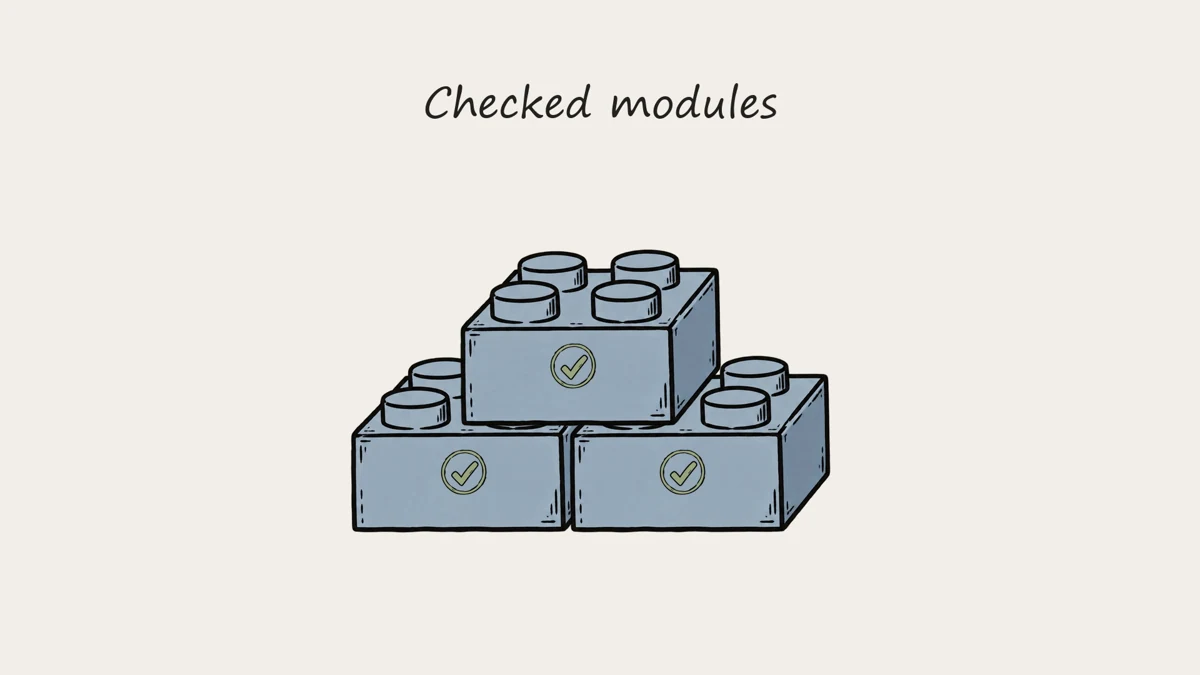
The discussion around AI-assisted mathematics prompted this question for me. A useful result doesn't have to mean that every idea in it is new. Combining established ideas may be the interesting work.
That isn't a shortcut around verification. OpenAI's mathematical research repository explicitly describes results at different stages of checking, with some lacking formal verification. A reported mathematical result isn't evidence that an assembled application is correct.
The connection I want to keep is simpler: why ask for a fresh implementation of every familiar part when the useful novelty may lie in how those parts work together?
Trusted parts don't guarantee a trusted whole
Imagine a small application assembled from existing authentication, forms, and reporting components. This is a hypothetical example, not a claim about a delivered client system.
The individual components might each have good evidence behind them. The assembled application could still let the wrong person see a report, pass incomplete data between steps, or handle a failure badly.
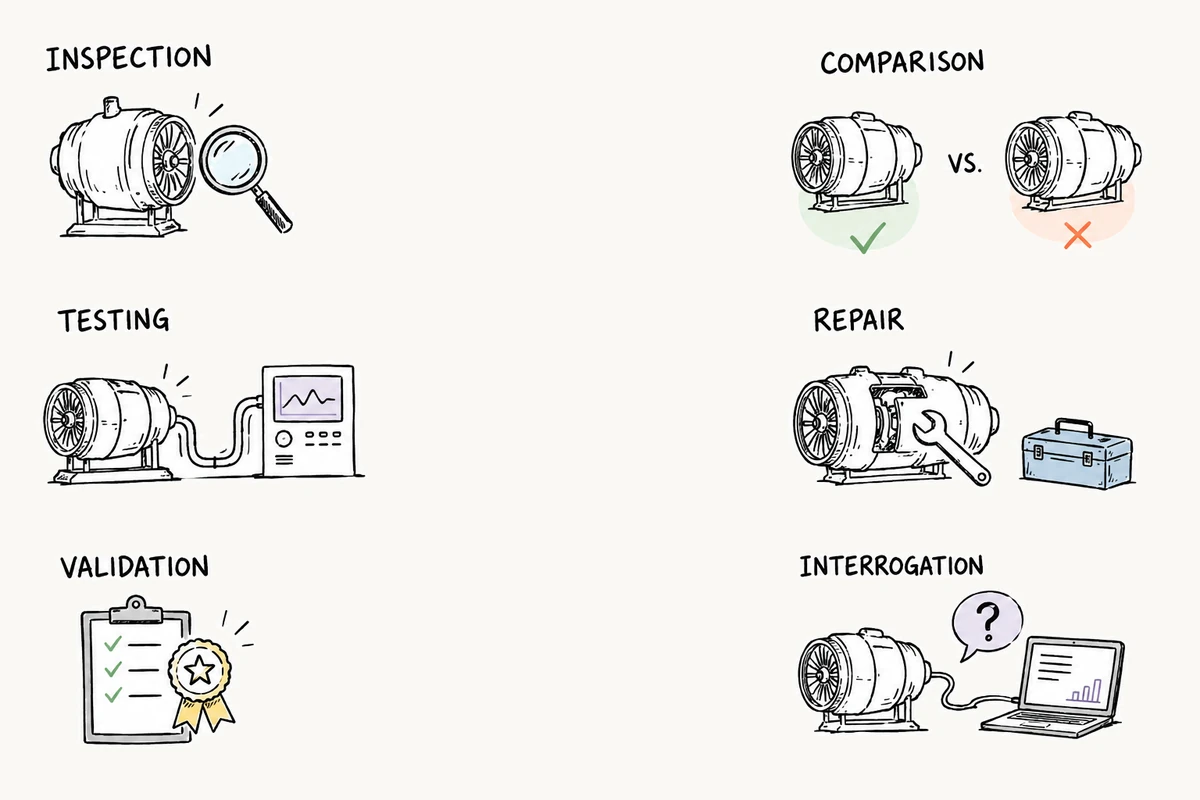
Reusing implementation changes what needs attention. It doesn't remove the need to understand the application. I'd check the assumptions each component makes, the permissions at their boundaries, the new code between them, and the behaviour a user actually experiences.
There is also an investment to account for. Someone has to build, document, validate, and maintain the components. If each new application needs a different set, preparing the library may cost more effort than it saves. Repeatable patterns make the proposal more interesting.
Try it on one repeatable pattern
I'd choose a bounded application and compare this approach with generating a fresh implementation. Keep the important requirements and acceptance checks the same.
Measure the whole effort: preparing the components, assembling them, investigating defects, reviewing changes, and maintaining the result. A smaller diff is useful only if it also leaves the team with a system it can understand and operate.
The experiment could show that reuse reduces routine review, or that the integration work dominates. Either result would improve the next decision.
Faster releases remain a possibility to test. The first question is how much new implementation we need, and the second is whether we can show that the complete system does the right thing.
Adapted from the full replacement Akermoor Short AI Code Review Is the Bottleneck. Write Less Code?.