

AI Agents Need More Than a Conductor
Orchestration engineering is the work of making humans, agents, models, and tools operate as a coherent system, with clear ownership of its costs, permissions, and results.
If nobody owns the routing, budgets, approvals, and traceability, an agentic system can become living spaghetti with access to your credit card.
That's the problem I mean when I talk about orchestration engineering. Getting an agent to do something clever is one part of the work. Designing how that work moves through a real team is another.
Someone has to own the second part, whether or not orchestration engineer ever becomes a job title.
The work around the answer
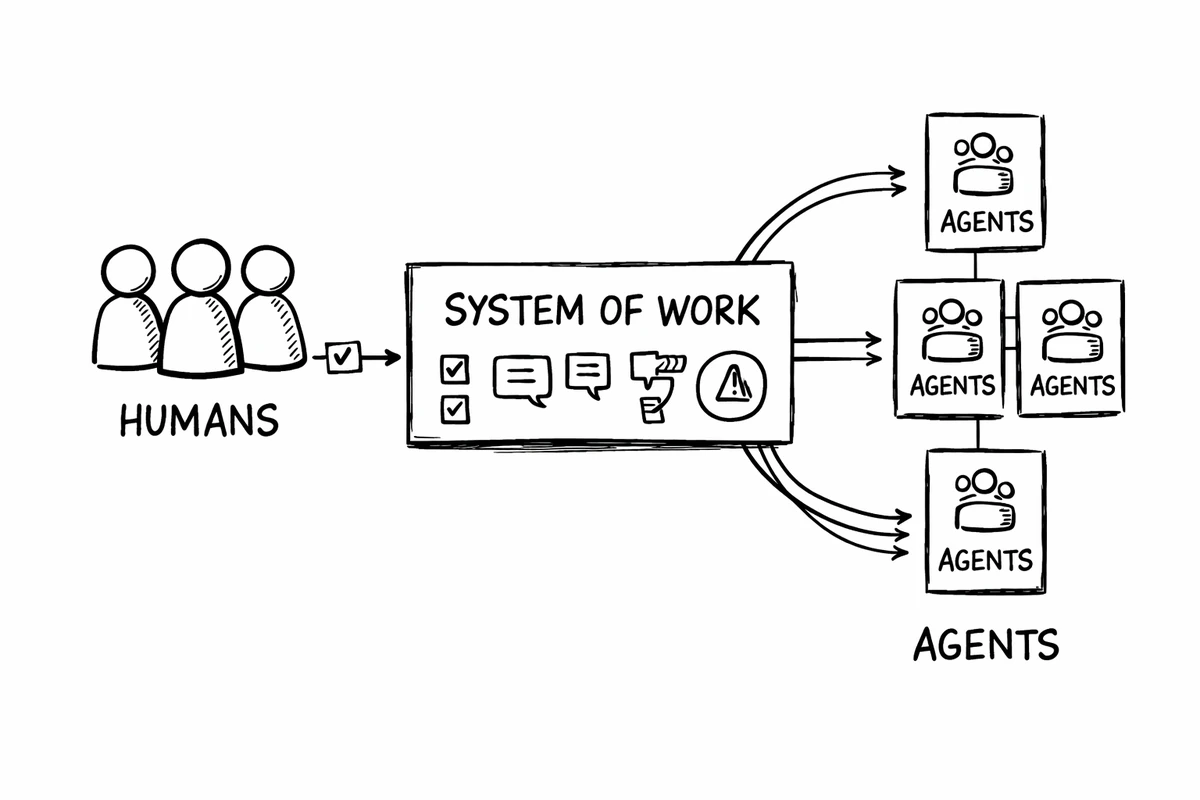
When I build agentic swarms, I notice how much of the orchestration layer is me. I'm managing communication between agents, deciding which model should do which job, what stays local, what runs in the cloud, and which tools each agent can touch.
It can feel like conducting an orchestra. You're deciding who comes in, when, and in what role. But the analogy only takes us so far. A software workflow also needs permissions, budgets, evidence, and a way to recover when something goes wrong.
In the narrow sense, prompting is about getting a better output from a model. Orchestration is about the system around that output: how work is assigned, which information travels with it, what the next stage needs, and who can approve an action.
That brings it close to familiar engineering concerns. Interfaces. Environments. Pipelines. Access controls. Operational flow.
The humans belong in the design
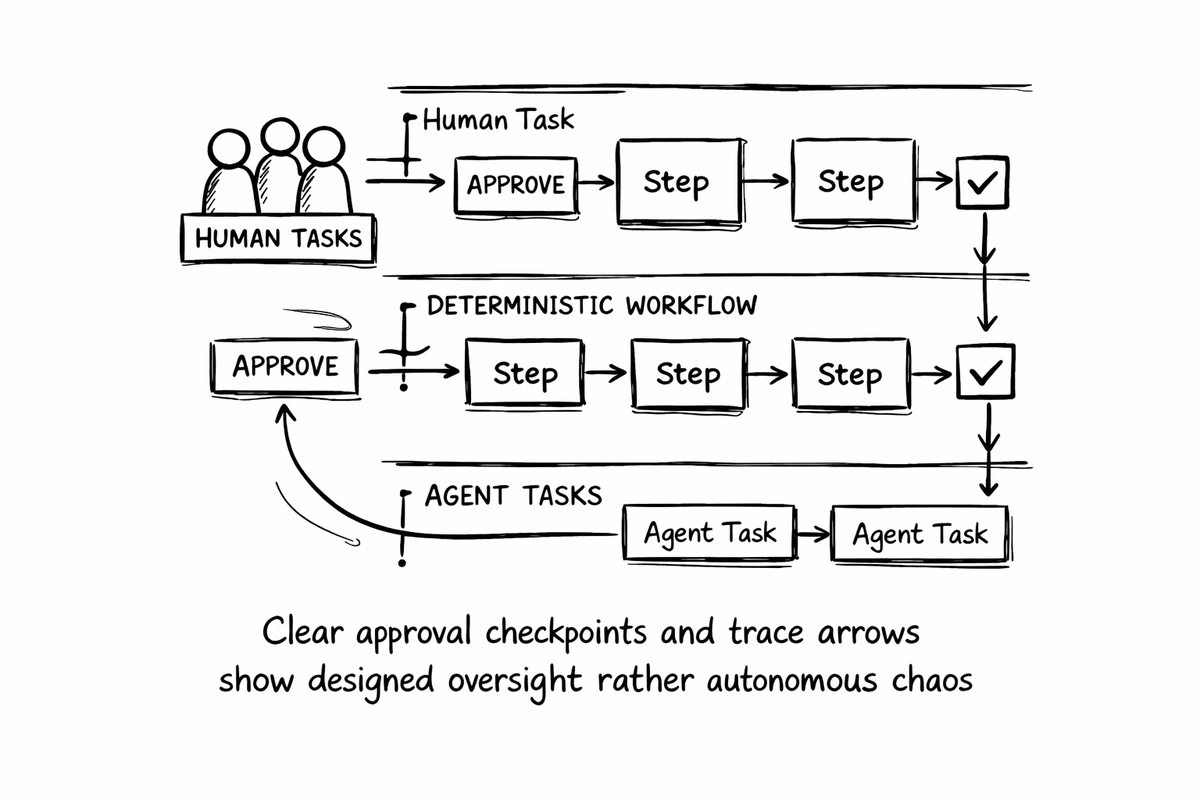
An impressive demonstration might have one person supervising a swarm. A working delivery system may have several people updating the same specification, progressing different strands of work, and trying to understand who owns each decision.
Those are human and agent coordination problems together.
A handoff that looks successful because an agent produced a document may still fail if the next person can't use it. Two agents can complete their tasks while creating conflicting changes. A costly reasoning step might add nothing when all the workflow needed was to pass an already validated result to the next stage.
The responsibility is to make the whole flow useful. Counting completed agent tasks doesn't tell us whether we've done that.
Keep the system economically sensible
Moving from systems administration into DevOps was magical for me. Instead of ordering equipment, carrying it into a server room, wiring it up, and building an environment by hand, I could create scripts and pipelines that made the environment appear and test it automatically.
This feels a little like that. Only now, we're assembling temporary teams for intellectual work: a planner, a researcher, a reviewer, a critic, or a test runner.
But the magic isn't an argument for using every possible role. Sometimes the sensible design is one capable agent, a deterministic workflow, and a clear human checkpoint.
A good orchestrator needs to ask whether the swarm is earning its keep. Does another review find a different kind of defect? Does another agent reduce effort overall, once coordination and checking are included? Would a simpler system be easier to understand and operate?
That question also applies before the workflow starts. Faster execution won't rescue an unclear product definition or make unnecessary work worth doing.
Give the responsibilities an owner
For a proposed human-agent workflow, I'd want clear answers to a few questions:
- Who owns the task and the shared specification?
- What must each stage provide before the next stage can proceed?
- Which data and tools can each agent access?
- Which actions require human approval?
- Who owns the budget, the traces, and the response to a failure?
- How will we decide whether the workflow is better than a simpler alternative?
These responsibilities might sit with a platform engineer, a staff engineer, a systems specialist, or a technical leader. I don't know whether we'll settle on a new title. There's a fair argument that this is another maturity layer of work good engineers already do.
The title can remain unsettled. The ownership can't.
The useful shift is from fascination with an isolated demonstration to responsibility for a system of work. It should help real people deliver something worthwhile, within boundaries they can understand and costs they can justify.
That's the engineering judgment I want behind the agents.
Adapted from my published video, AI Agents Are Becoming Expensive Theatre.