

Instructions Are Not Guardrails
An instruction tells an agent what it should do. Permissions and independently enforced checks determine what it can do. The difference matters when the agent can send, change, or release something.
Every October, I go away with a group of dads, and we have these lovely coastal walks. My mate Nic loves going right up to a cliff edge and looking over.
He loves cliffs, and I love Nic. So I tell him to come back from the edge.
Those are instructions. A guardrail is something different: a boundary that doesn't depend on him deciding to follow my advice. The analogy has limits, but it's a useful way to think about AI agents.
A polite request can still be useful
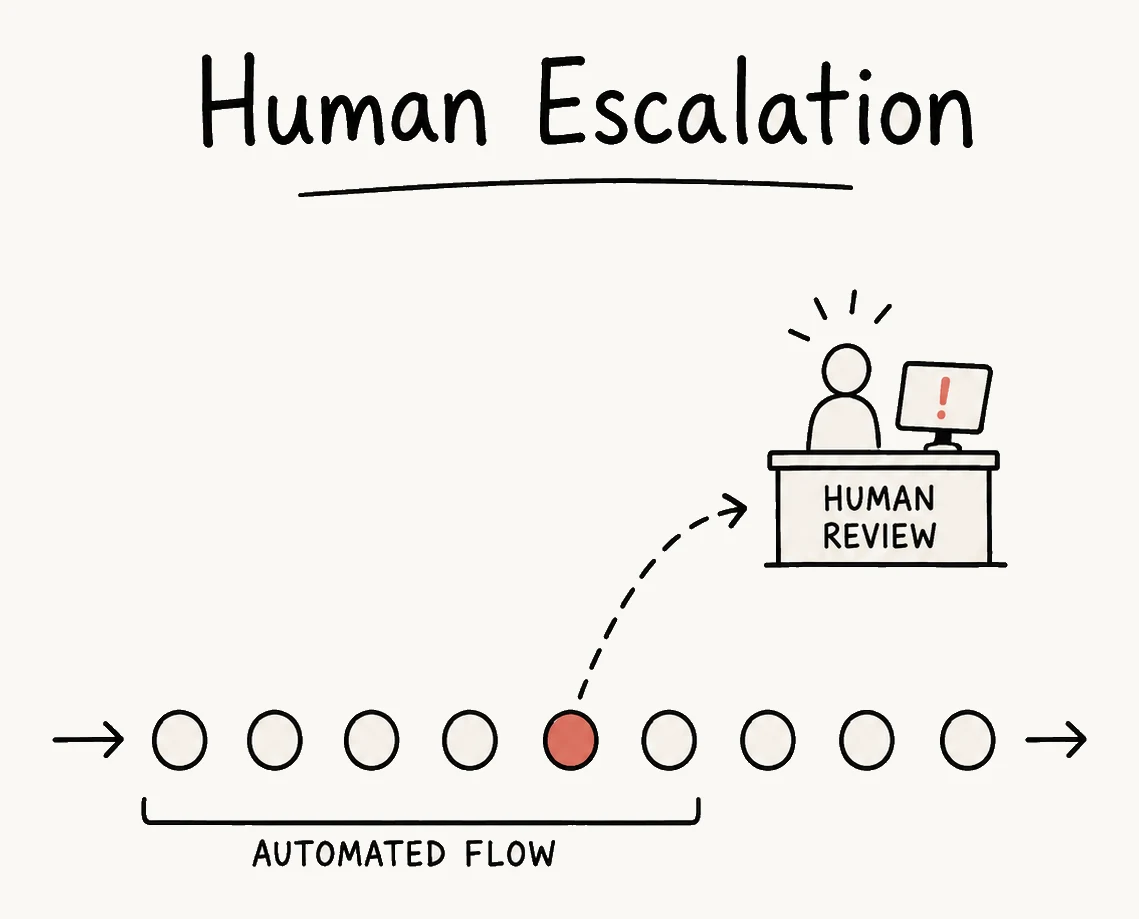
“Don't update production.” “Don't send that email as me.” “Fix the code rather than changing the tests until they pass.”
Those are sensible instructions. They describe intent and can help an agent work appropriately. But if the agent still has the tools and credentials to perform the forbidden action, the instruction hasn't removed that capability.
The question is what enforces the restriction when the agent makes a mistake or follows the wrong instruction.
Separate the actions you actually mean
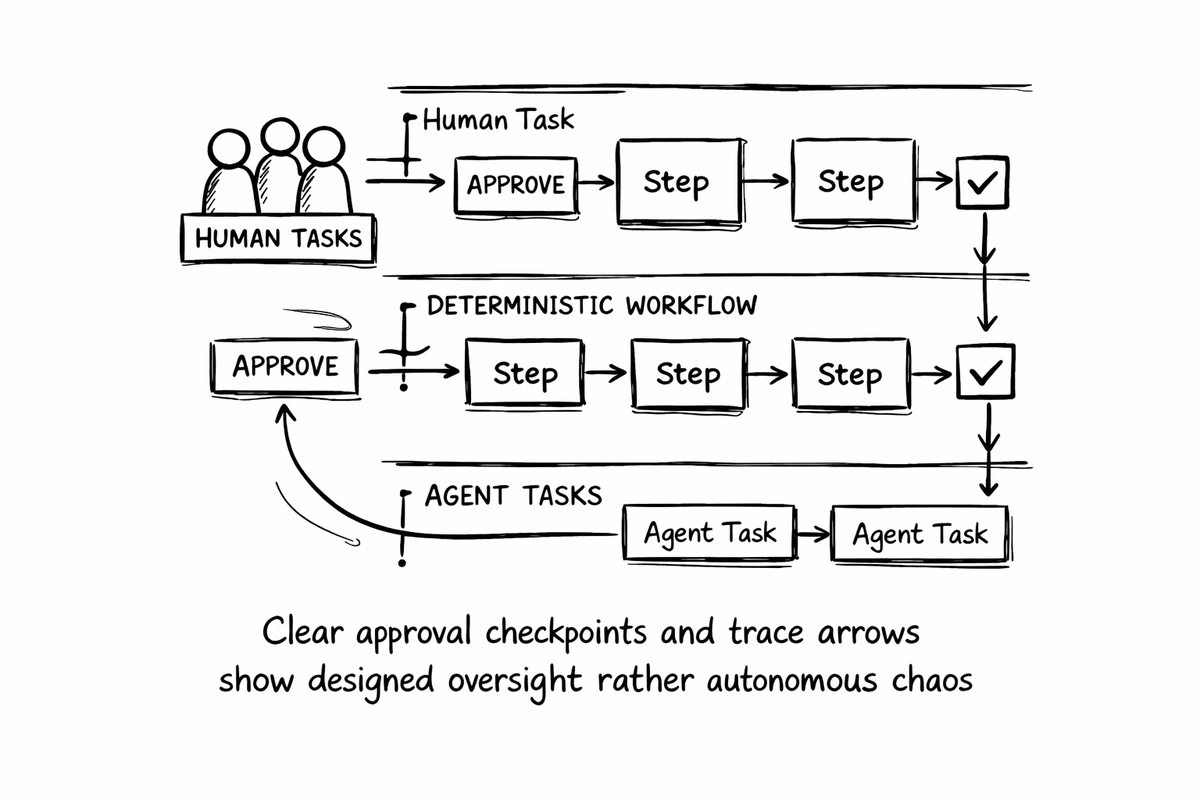
The detail matters. Reading an email, drafting a reply, and sending it are different actions. If an agent's job is to prepare a reply for review, it should have the access needed for that work without an available route to send it as you.
The same distinction applies to tests. An implementation agent may need to read and run tests, and it may usefully propose new ones. That doesn't mean it should be able to weaken the protected acceptance checks that determine whether its work is accepted. Review and approval of those changes can sit outside its authority.
For production, ask about the complete route to a change. Removing one deployment tool won't establish a boundary if another credential or command gives the agent the same power. The effective permissions matter more than the label on the role.
This follows the least-privilege approach in OWASP's AI Agent Security guidance: scope tools to their task and enforce authorization for sensitive actions.
Check the boundary from outside the agent
I'd start with one instruction that really matters. Name the action it forbids, then identify the mechanism that would stop that action regardless of the model's answer.
Can the drafting agent send a message? Can the builder alter the independent check? Can it obtain production access through another available tool?
Test those boundaries in a controlled environment. A reassuring explanation from the agent is evidence of what it says, not proof of what the surrounding system permits.
Instructions remain part of a useful design. So do scoped permissions, separated responsibilities, and checks the agent can't simply talk its way around. The important distinction is between asking it to stay back and deciding where it is actually allowed to go.
Adapted from the Akermoor Short Instructions ≠ Guardrails.