

Do You Actually Need AI?
Start with the outcome, choose the right mix of people and tools, and measure the whole job rather than the speed of the first answer.
If the problem is an unreasonable deadline, a friendlier AI-written email won't fix it. If there's no demand for a product, building it faster won't create the demand.
I think we need to be more comfortable asking whether AI belongs in the solution at all. Sometimes the answer is a spreadsheet, a conversation, or a change to the thing we're being asked to do.
I catch myself reaching for the AI tool that's already open before I've stopped to ask what I want. Capability is interesting. Purpose comes first.
Getting there faster might miss the point
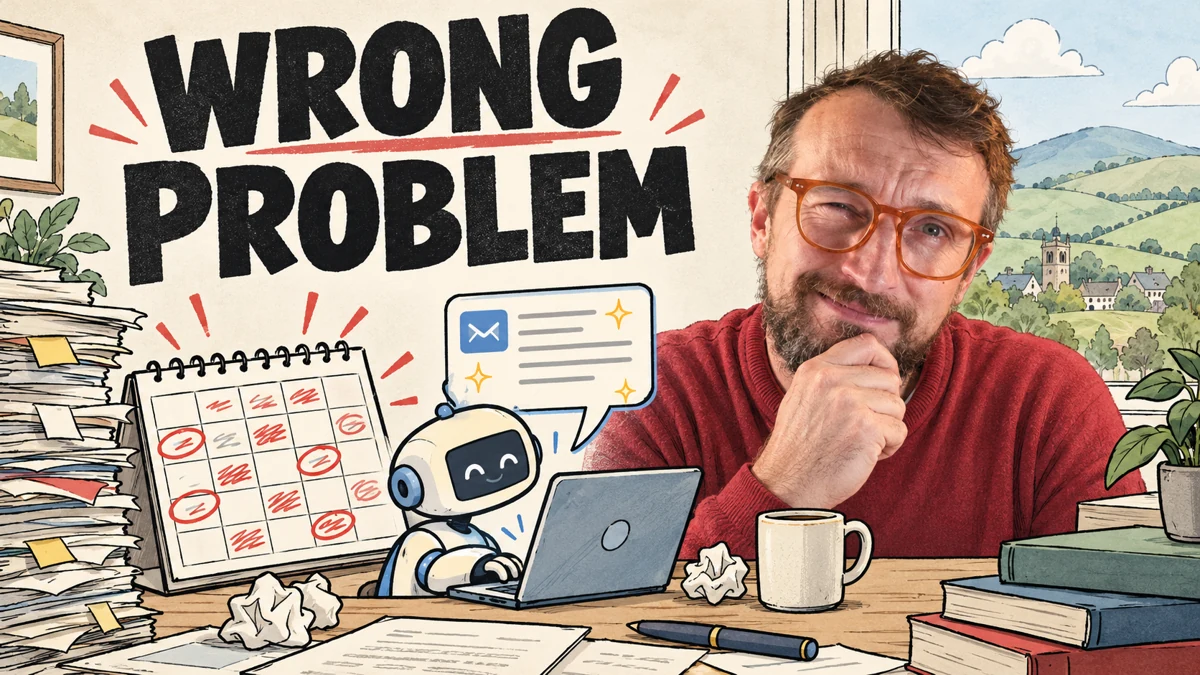
A car can get me somewhere faster than walking. But if I wanted exercise, daylight, and an unexpected encounter with an angry squirrel, speed wasn't the whole objective.
I noticed something similar while discussing the video behind this article with a language model. I couldn't remember the word corpus. I explained what I meant, and the model supplied it remarkably well.
That was useful. It also made me wonder whether, at that moment, I'd been enjoying the game of fishing an inaccessible word out of my own brain. Helping me communicate and helping me think aren't always the same job.
The same distinction matters at work. Asking a colleague can be valuable because they know the project, remember an earlier decision, or help me think it through. The conversation is part of the result.
Match each part of the job to a tool
Suppose I'm looking through a completely hypothetical collection of apology letters.
If I want the passage where I explained that I was drunk, I might have written “hammered”, “plastered”, or any number of other things. Searching by meaning could help me find it without remembering the exact words.
If I'm looking for the passage about returning a llama unharmed, searching for “llama” might be quite sufficient. It remains a hypothetical llama.
An exact word search and an interpretation of meaning are different jobs. So are interpreting an RSVP and counting the resulting attendance labels.
For free-text replies, a language model might help identify who is attending. An ordinary counter can then add up the labels. Structured yes-or-no replies might be counted directly. We still need to check ambiguous interpretations: correct arithmetic can't repair an incorrect label.
We can combine people, ordinary software, and AI capabilities. We don't have to give the whole task to whichever chatbot happens to be open.
Give the person something useful to do
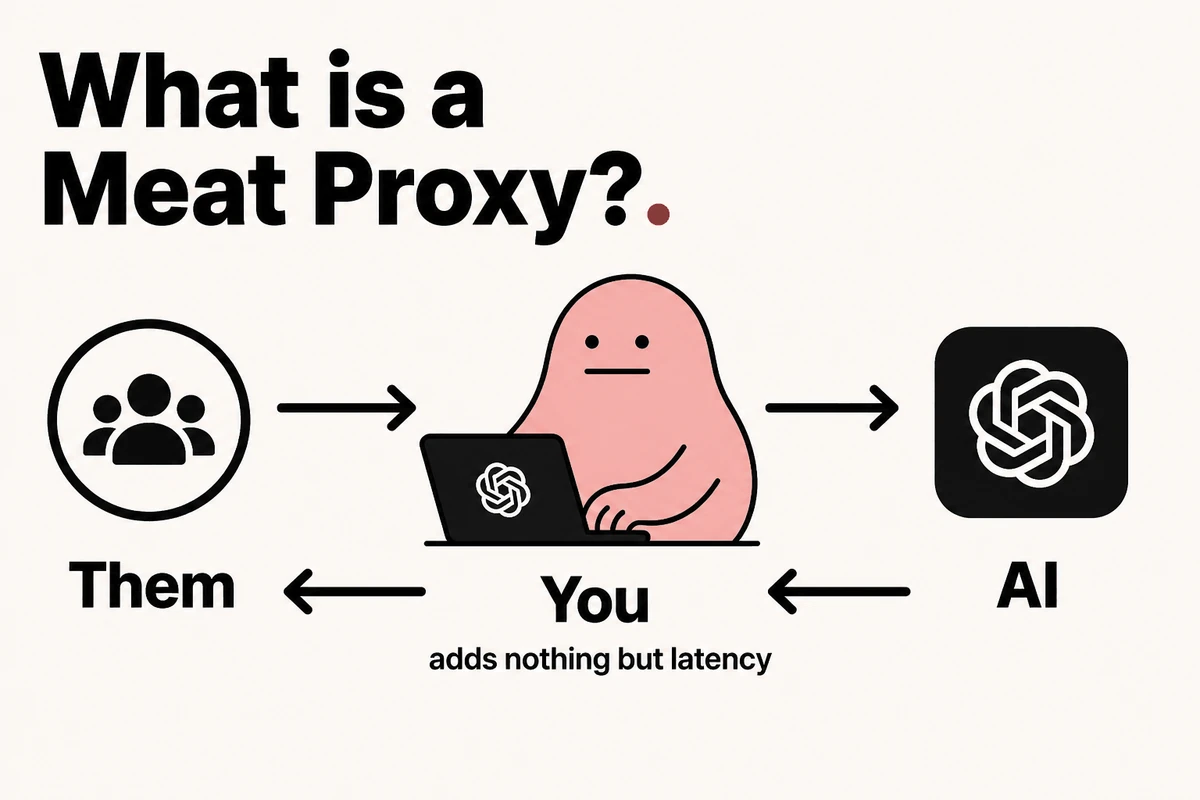
Putting a human into a process doesn't automatically improve it.
I used to call one way of working with a language model “code tennis”: ask for code, paste it into an editor, run it, send the error back, and repeat. It's easy for the person to become a copy-and-paste automaton while believing they're providing meaningful oversight.
I learned a more painful version of that lesson while trialling a custom GPT to help with performance reviews. It was meant to summarise real feedback and cite examples. Something hallucinated by the model ended up in an engineer's review.
I think I'd spotted the hallucination but muddled up my copying and pasted the bad sentence into the good review. The engineer was understandably upset.
The change I'd make is to check the actual final review against the source feedback after copying and editing. Checking one version and sending another defeats the check.
AI can help summarise repeated feedback. Deciding what that feedback establishes, and taking responsibility for the review, remain separate jobs.
Judge the whole job
Before introducing AI, I'd want us to say what we expect to gain. Does it reduce total effort, improve reliability, make the result better, or let us do something worthwhile that we couldn't do before?
Include setup, checking, and repairs in that judgment. A faster first answer can still produce a slower or weaker workflow.
Then compare the proposal with a simpler approach. Could a clear rule do the calculation? Would asking the person give us information the system doesn't have? Is the underlying request worth doing?
There are plenty of valuable uses for AI. Learning when to use it well includes recognising when to leave it out.
Adapted from Do You Actually Need AI?. The performance-review incident and word-finding observation are my recollections; the apology letters and llama are illustrative humour.