

Decide What Your AI Pilot Needs to Teach You
Before building an AI pilot, identify the decision it must inform, the uncertainty it must reduce, and the evidence that would justify the next step.
Imagine finishing an AI pilot with a working demo, an enthusiastic sponsor, and no clear answer to whether the business should use it.
The team has built something. It may even be impressive. But the next conversation still depends on the same assumptions that justified starting the work.
I think that's a useful test of a pilot: what do we expect to know afterwards that we don't know now?
Start with the decision
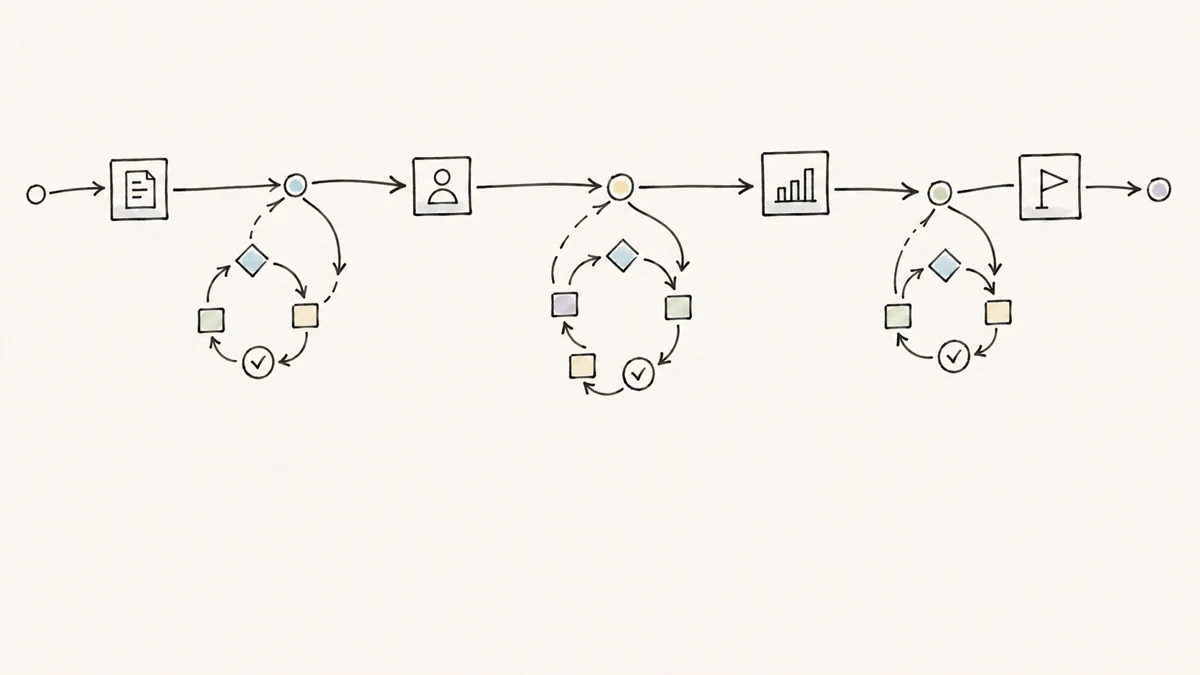
“Explore AI for customer support” leaves a lot open. It doesn't tell the team what to build, what to measure, or when it has learned enough.
A more useful starting point might be: should we introduce an assistant that prepares replies for a defined group of support requests?
That creates a decision we can investigate. We can ask which requests are suitable, whether the drafts help, how much checking they need, and what happens when the system lacks enough information.
We also need to identify who will make the decision. Otherwise, the pilot can finish with useful evidence that nobody has agreed to act on. Put that accountability in the pilot brief, alongside the question and the evidence.
Find the uncertainty that matters
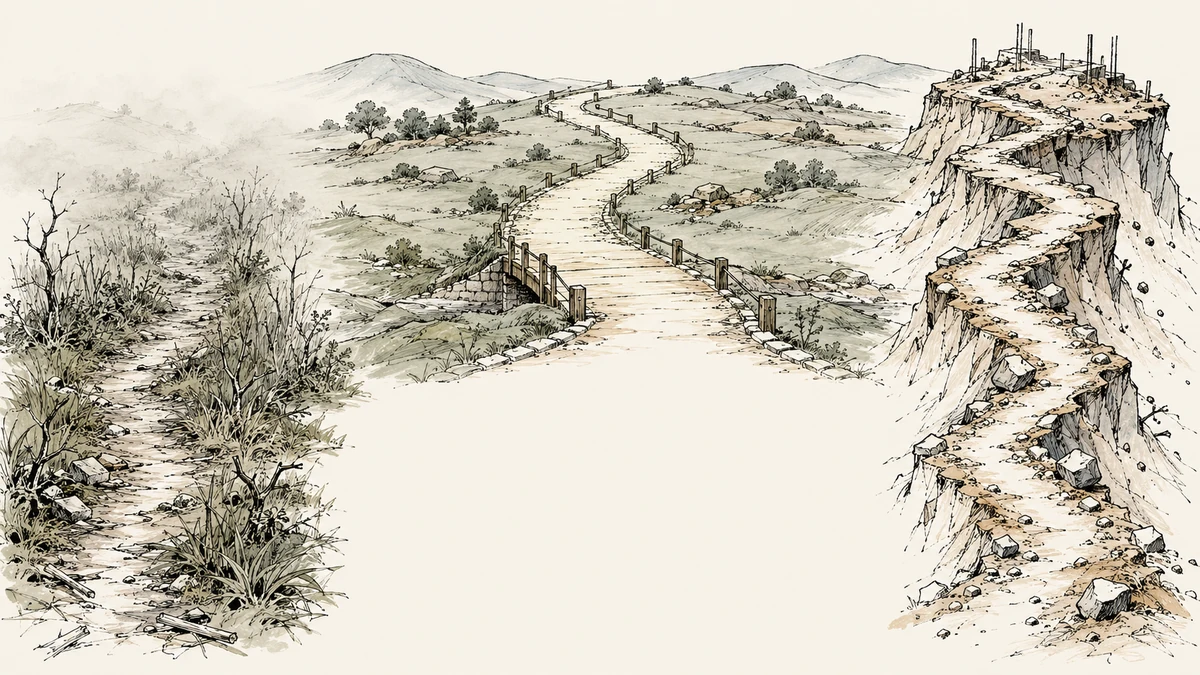
There will usually be more than one unknown. Can the system do the task? Will people use it? Can we access the right information? Does the benefit justify the effort of operating it?
Trying to answer all of them at once can turn a small experiment into a miniature transformation programme.
I'd start with the uncertainty most likely to change the decision. If we don't know whether the team can access reliable source information, that may deserve attention before we design an elegant interface. If the task is technically straightforward but users don't trust the output, another technical demonstration may teach us very little.
The smallest useful pilot is the one that tests the important assumption. Its size follows from the question.
Agree what counts before seeing the result
Take the support assistant example. A promising result might be that people can prepare an acceptable reply with less total effort, without missing important policy details.
That means measuring more than generation time. Read the draft. Check its sources. Correct it. Handle the awkward cases. Include that work in the comparison with the existing process.
Choose examples that reflect the proposed use, including incomplete requests and cases where the right response is to ask a question. A demonstration built around the easiest inputs won't tell us much about the difficult part of the job.
The team should agree the important criteria in advance. What would justify continuing? Which failures require a redesign? What result would lead us to stop?
Those criteria can evolve when we learn something unexpected. If they change, record why. Otherwise, it's too easy to keep redefining success around whatever the system happened to do well.
Keep the conclusion within the evidence
A pilot with selected examples and an attentive engineer tells us something useful about that setup. It leaves other questions open.
Will the source information stay current? Who supports the workflow? Can another team operate it? Does the benefit remain when volumes, users, and exceptions change?
We don't need to answer every production question before experimenting. We do need to distinguish what we've demonstrated from what we're still assuming.
That gives the next step a purpose. We might extend the pilot to a broader set of requests, test it with the people who will use it, or investigate the cost of keeping its information reliable. Each step should resolve a named uncertainty.
Write down what changed
At the end, I'd want a short record: the decision, what we tested, what we learned, what remains uncertain, and the recommended next step.
Continuing is one possible result. So is narrowing the scope, choosing a simpler approach, or stopping. Discovering early that an idea doesn't justify further investment is useful work.
Before commissioning the next pilot, try finishing this sentence: “We need this experiment to tell us whether…”
If the answer is clear, the team has a much better chance of building something that improves a decision.