

AI Says It's Done. Check Whether It Did the Whole Job
Define the result, ask clearly, and check coverage, correctness, and consistency before deciding whether the workflow was worth it.
A good-looking answer can still leave half the job unfinished. Before accepting an AI-generated result, I want to ask whether it contains everything we needed, whether the evidence supports it, and whether the parts work together.
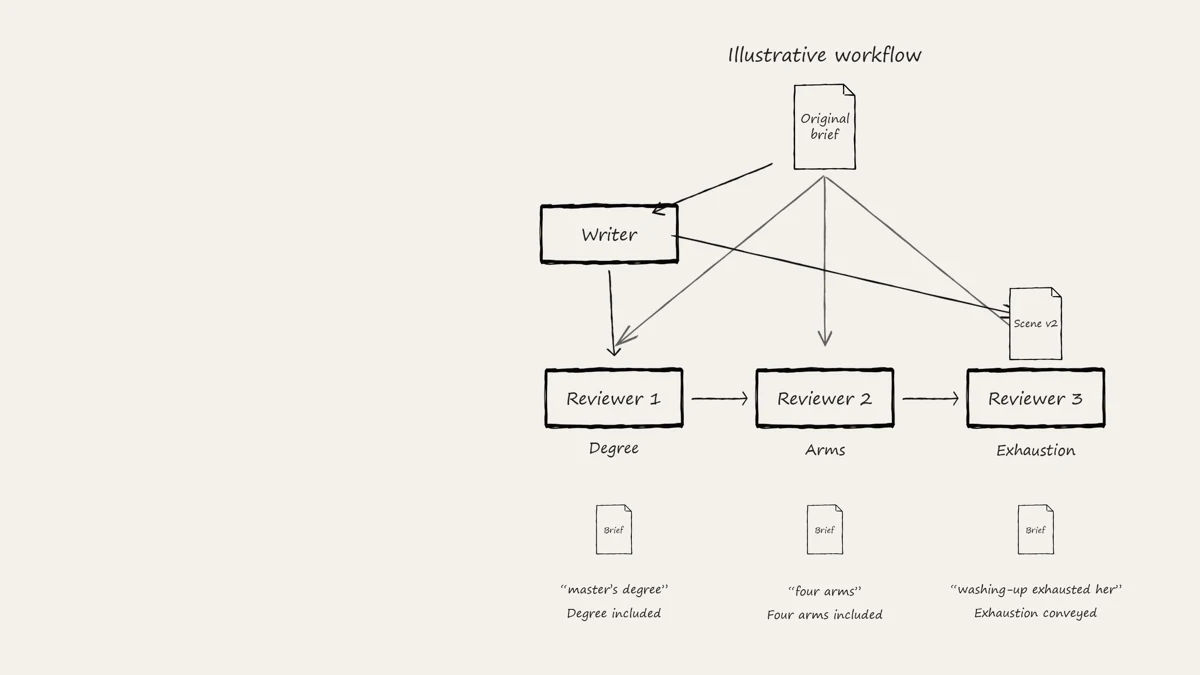
In my video, I explain this through an angry cat who calls his legs arms, has just earned a master's degree, and is exhausted from doing the washing up. A model could write an entertaining scene and quietly forget the degree. The scene might be good. It still wouldn't meet the brief.
The same problem appears in a bid presentation missing a win theme, a review missing an objective, or a software change missing a requirement. Delivery needs a check that the work is complete, as well as checks on the parts that are present.
A useful conversation can leave gaps
While studying machine learning, I used practice papers to find concepts I hadn't understood. I'd give a language model the questions I'd got wrong, switch to voice mode, and ask it to talk me through them while I did the washing up.
That was genuinely useful. I could explore the underlying concept in detail. But after six or seven questions, I'd sometimes find the conversation repeating itself, losing its place, and leaving questions untouched.
That's an observation about those sessions. It isn't a controlled experiment identifying the cause.
The research I discuss in the video offers related cautions. Lost in the Middle found that performance on its retrieval and question-answering tasks varied with where relevant information appeared. ComplexBench evaluated difficulties with combinations of constraints. Those findings concern the tested models and tasks; they don't establish why my revision conversation lost track.
The practical implication is simpler: a response finishing doesn't establish that the entire request has been checked.
Define, ask, validate, and evaluate
I use DAVE as a reminder of four responsibilities.
Define quality. What would make the result successful? For the cat, do we need the word “exhausted”, or do we need a reader to understand its exhaustion? Those are different requirements. Define what matters and what must be avoided, while leaving room for useful choices.
Ask for quality. Give the system a clear brief, the relevant context, and the kind of result you want. If requirements conflict, say what takes priority or ask for the conflict to be raised. Quietly dropping a difficult requirement isn't a useful resolution.
Validate quality. Bring the original brief back and inspect the actual output. A confident summary of the work isn't a substitute for the work itself.
Evaluate the workflow. Once the task is complete, ask whether the process was worthwhile. Did the checks help? Was the definition good enough? Did the extra effort produce a better result?
The last step stops a useful checking method becoming an elaborate ritual we never question.
Check three different things
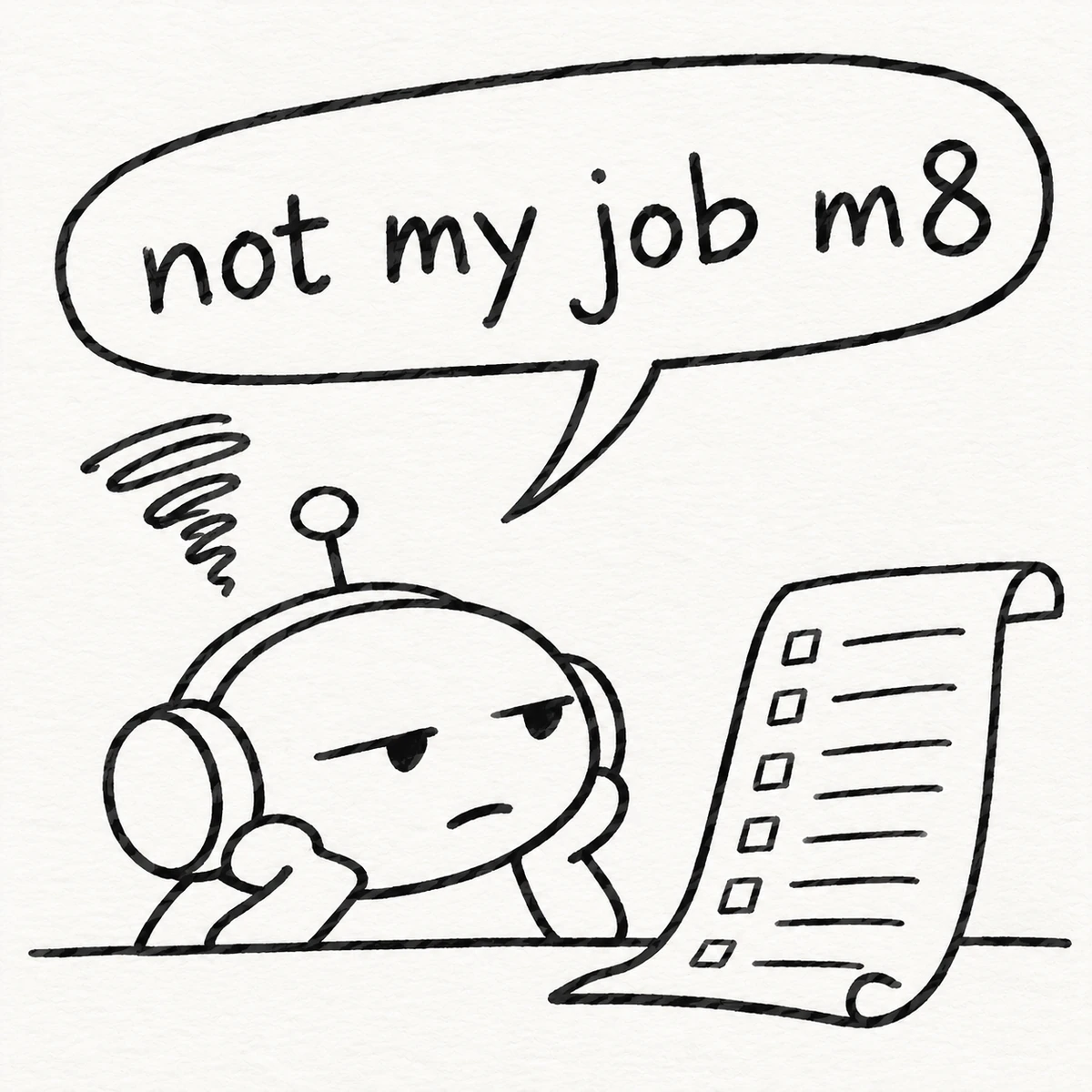
For validation, I find three Cs useful.
Coverage: is there a finding against every requirement? “Met”, “not met”, and “uncertain” are all useful findings. A requirement silently missing from the review is not. Ordinary code can check whether every identifier has a corresponding finding, although that doesn't establish that the finding is right.
Correctness: does the evidence justify each finding? A wet, angry cat beside dirty dishes may or may not read as exhausted. Ask where the scene establishes it. Similarly, a test being present doesn't establish that it checks the required behaviour.
Consistency: does the complete result still work? One revision might say the cat graduated this morning; another might say it spent the last week celebrating the degree. Each reviewer has addressed a requirement, but the timeline no longer makes sense. Recheck the whole after local repairs.
Keep the checking proportionate
For a substantial task, separate reviewers can examine different requirements, with each given the original brief and the latest result. Running them in sequence can let later reviewers assess earlier repairs, followed by a final check of the complete work.
They can still share a mistake. Agreement is useful evidence, not a guarantee. Limit repair attempts and bring unresolved decisions back to a person rather than cycling until someone says “pass”.
Many tasks need much less machinery. A short checklist and a careful read-through may be enough.
Start with the result you need. Ask for it clearly. Check what was actually produced. Then decide whether that way of working helped. The cat would probably appreciate one fewer unnecessary review of its afternoon.
Adapted from AI Says It's Done. But Is It?. My study experience is anecdotal; the linked research has its own task and model limits.